Six years of the same optimistic forecast. When do we start asking different questions?
Ottawa’s Q1 2026 vacancy numbers are in, and the promised recovery still has not arrived. It may be time to stop waiting for the old market and start understanding the new one.
Every quarter, like clockwork, the same prediction resurfaces. Office vacancy is high, yes, but recovery is just around the corner. This time it will be different. This time the numbers will turn.
Ottawa’s Q1 2026 office vacancy data landed this week, and the corner has not been turned. CBRE pegged the city’s office vacancy at 14.3 per cent, up a full point from December. Colliers reported 12.9 per cent, with 372,000 square feet of total leased space disappearing in a single quarter.
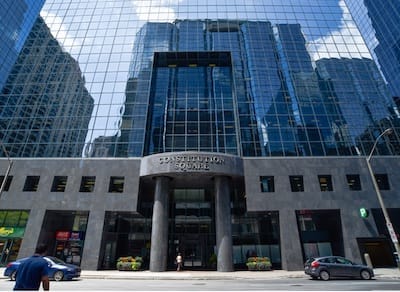
Three full floors at Constitution Square came back to the market. The federal government shed more than 225,000 square feet across two locations. Giant Tiger decided it does not need to occupy its entire headquarters – a building that opened only five years ago.
And yet, within the same reports, two of Canada’s largest brokerages frame this as a passing phase. CBRE’s Ottawa managing director describes the situation as a “digestion period” and suggests we are on “the tail end” of the adjustment. That would be easier to accept if CBRE’s own national research did not tell a very different story.
We heard it in 2022, when return-to-office mandates were going to bring everyone back. We heard it in 2023 and 2024, when each new quarter was supposed to mark the turning point.
We have heard this before. We heard it in 2022, when return-to-office mandates were going to bring everyone back. We heard it in 2023 and 2024, when each new quarter was supposed to mark the turning point. The language shifts slightly each time, but the optimism is always just a quarter or two ahead of the present, and the numbers keep telling a different story.
Let’s look at those numbers plainly, starting with CBRE’s.
The national picture
Nationally, according to CBRE Canada’s year-end report, the office vacancy rate closed 2025 at 18 per cent. That is down from 18.7 per cent the year before, which sounds encouraging until you remember that the pre-pandemic rate was 10.9 per cent. We are still sitting nearly 65 per cent above that baseline after six years.
And the modest improvement was not driven primarily by tenants flooding back. CBRE’s data shows that since 2021, roughly 7.8 million square feet of Canadian office space has been converted to other uses and another 2.6 million square feet demolished. When vacancy improves because buildings stop being offices, that is not recovery in any traditional sense. That is the market repricing what office space is for.
Ottawa’s own wrinkle
In Ottawa specifically, the current optimism is pinned almost entirely on the federal government’s four-day-a-week RTO mandate, set to take effect in July. But this assumption deserves scrutiny. Ottawa has already been through a three-day mandate, and rather than stabilizing demand, the government continued shedding space throughout that period.
CBRE reported more than 413,000 square feet of negative absorption in Q1 alone, driven largely by federal departures. Public Services and Procurement Canada, the very department responsible for managing the government’s real estate portfolio, vacated 114,000 square feet of its own space. If the agency in charge of federal office space is giving it back, it is worth asking what that signals about the trajectory.
If the agency in charge of federal office space is giving it back, it is worth asking what that signals about the trajectory.
A widespread trend
The broader pattern is not unique to Ottawa. CBRE’s national numbers show Toronto accounted for the vast majority of Canada’s positive net absorption last year, and even that market remains at 18 per cent vacancy. Calgary sits at 25.9 per cent. Montreal at 18.3 per cent. Markets like London, Ontario, have crossed 26 per cent. The few cities with lower vacancy, Vancouver and Halifax among them, got there partly because construction has fallen to 20-year lows and supply is being permanently removed.
The structural shift
None of this is to say the office is dead. It clearly is not. But the version of recovery that keeps being promised, one where vacancy numbers march steadily back toward pre-pandemic norms, requires a set of conditions that has not materialized in six years and shows little sign of materializing now.
Organizations have learned to operate in less space. Hybrid arrangements, whether employers love them or not, have become a baseline expectation for the majority of the workforce. HR firm Robert Half’s 2026 data found that just 16 per cent of professionals rank a fully in-office role as their top choice. That is not a temporary preference waiting to be overridden by a mandate. That is a structural shift in how people relate to where they work.
Just 16 per cent of professionals rank a fully in-office role as their top choice, according to Robert Half’s 2026 data. That is not a temporary preference. That is a structural shift.
Consider the source
It is worth noting who is making these forecasts. CBRE and Colliers are not only research firms. They are among the largest managers and leasing agents for office buildings in the country, representing the landlords who own the very inventory that sits empty. Their perspective is informed and valuable, but it is also shaped by a business model that benefits directly from tenants returning to, and paying for, traditional office space. That context matters when evaluating how confidently recovery is being predicted.
What we are seeing on the tenant side
Our experience on the tenant side of the market tells a very different story than the one being forecast. At RealStrategy, we work closely with not-for-profit organizations, a sector that occupies a significant share of Ottawa’s office inventory. What we are seeing across that client base is unambiguous: these organizations have fully embraced flexible work, and they have no intention of reversing course. For many of them, the shift is not provisional or experimental. It is a policy. They have restructured their operations, renegotiated their space requirements, and in many cases decided the office footprint they occupied before 2020 is simply no longer necessary.
This is not limited to the not-for-profit sector, but it is especially visible there because these organizations tend to be the smaller tenants that once filled the older class-B and C buildings across the city. When those tenants leave, they are not relocating down the street. They are leaving the market permanently, consolidating into smaller, better space or eliminating their physical office altogether. That is a significant part of why so many of Ottawa’s aging office buildings are now candidates for conversion or demolition. The tenants that once sustained them are not coming back, because the way those organizations work has fundamentally changed.
Time for a different conversation
Six years of the same optimistic prediction meeting the same contrary data should, at some point, prompt a different conversation. Not about when the old market returns, but about what the new one actually looks like. The organizations we work with every day are not waiting for 2019. They are making clear-eyed decisions about the space they need right now, and they are finding that the right space, designed with intention, is more valuable than simply more space. That is the shift worth paying attention to.